YouTube for service businesses works differently than paid ads because a video keeps generating leads long after you publish it, while an ad stops the moment you stop paying. Customer acquisition costs have risen 222% over the past eight years, and that trend isn't reversing. A well-optimized video published this quarter can still be bringing in leads next year, at no additional cost per lead. This post breaks down the real math, when YouTube makes sense over ads, and what it actually takes to make it work.
You've run the ads. You know the drill: turn the budget on, leads show up. Turn it off, they stop. Every quarter, the cost per click creeps up and the leads get a little more expensive.
YouTube for service businesses works on a completely different clock. A video you publish once can keep showing up in search and recommending itself to new viewers for months, sometimes years, without you spending another dollar to keep it running. That's not a theory. It's how the platform's search and recommendation system actually behaves.
This isn't an argument that ads are worthless. It's an argument that if you're a service business relying on paid ads as your only lead engine, you're paying full price every single month for something YouTube can hand you for free after the first draft.
The Real Problem: Paid Ads Cost More Every Year You Run Them
This isn't a seasonal blip. Recent small business acquisition data shows the gap between ad-dependent businesses and businesses with organic channels is stark: high-referral and organic-heavy businesses acquire customers for roughly $171, while businesses leaning entirely on paid social spend $937 or more for the same result.
Small businesses have already started noticing. Companies under $10M in revenue now allocate 28% of their marketing budget to SEO and organic channels, the highest of any spending category, and well above what larger companies spend there. That's not a trend chasing a buzzword. It's businesses your size doing the math on where a dollar actually goes further.
Every service business has three real constraints: time, technical skill, and marketing knowledge. Paid ads don't solve any of them. They just let you rent your way around the problem, one invoice at a time.
Why YouTube Works Differently for Service Businesses
Compare that to a paid ad. The moment your budget runs out, the leads stop. There's no residual value, no lingering visibility. You're back to zero the next billing cycle.
We've seen this firsthand with our own clients. Videos we've edited and optimized are still generating leads six months after publishing, with zero additional spend behind them. That's the entire case for YouTube in one sentence: the work you do once keeps paying you back.
The math backs this up outside of our own numbers too. One analysis found an evergreen video earning steady views over 24 months outperformed a trend-driven video's total lifetime views, even though the trending video had a much bigger opening week. Slow and steady isn't just a nice idea here. It's the actual math.
The Math: One Video vs. a Perpetual Ad Campaign
Here's the side-by-side most service business owners never see laid out plainly:
| Factor | Paid Ads | YouTube Organic Video |
|---|---|---|
| Cost pattern over time | Recurring, paid every month indefinitely | One-time production cost, then $0 to keep it live |
| Speed to first lead | Fast, often within days | Slower, typically 30-90 days to gain traction |
| What happens when you stop paying | Leads stop immediately | Video keeps generating leads |
| Cost per lead over 12+ months | Stays flat or rises with ad inflation | Drops steadily as views compound |
| Best use case | Immediate, short-term demand spikes | Long-term, predictable lead flow |
Neither column is "wrong." Ads are the right tool when you need leads this week and you're willing to pay for that speed. YouTube is the right tool when you want a lead engine that doesn't reset to zero every month. Most service businesses need both eventually, but almost none of them are currently building the second one.
It's Not Views That Matter. It's the Right Viewer
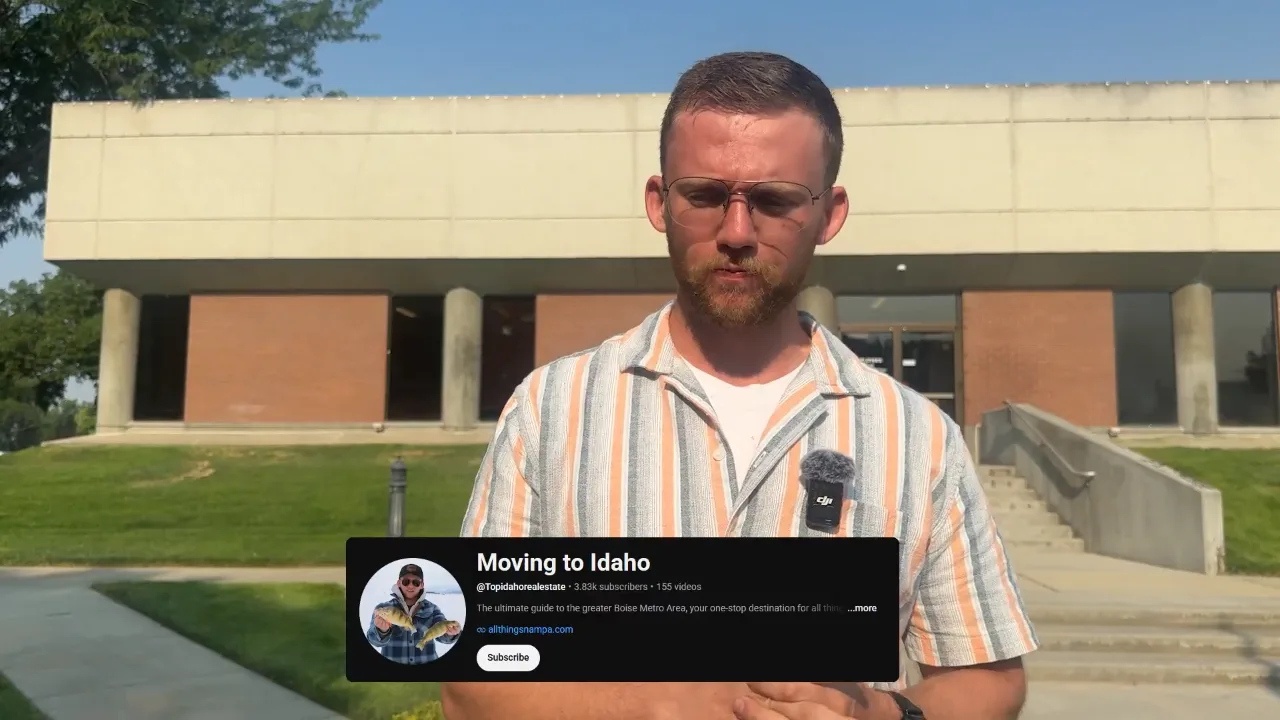
One of our clients, a real estate agent, published a video that only pulled in about 600 views. Unremarkable by vanity-metric standards. That video landed him a $1.6 million listing. You can read more about how our clients approach turning video views into actual business outcomes in our client work.
That's the piece most businesses miss when they compare YouTube to ads. Paid ads chase impressions and clicks. YouTube, done right, chases search intent. Someone typing "best real estate agent for [neighborhood]" into YouTube isn't scrolling for entertainment. They're closer to a buying decision than almost anyone you'd reach with a cold ad impression.
"Isn't YouTube Just Another Ad Platform?"
Fair question. YouTube does sell ads, and you could run them the same way you run Meta or Google Ads. But that's not the argument here, and it's worth being direct about the difference.
YouTube ads alone don't reliably deliver ROI without an organic foundation behind them. Paid placements on YouTube work best when they're introducing new viewers to a channel that already has searchable, ranking content waiting for them. Ads without organic content behind them just burn budget on strangers who have nowhere to land.
This post is about the organic side: videos optimized to rank in YouTube's own search engine, not paid placements. That's the part with no recurring media spend, and it's the part almost no service business is doing correctly.
What It Actually Takes to Make This Work
Service businesses that track video ROI properly watch a specific set of numbers: watch time, click-through rate on thumbnails, and whether video viewers convert at a higher rate than people who never watched. Views alone tell you almost nothing.
Most service business owners get stuck on the production side long before they ever get to test any of this. You know your industry. You don't necessarily know how to edit footage, write SEO-optimized titles and descriptions, or design a thumbnail that earns a click instead of a scroll past. That gap is exactly why most channels never get past a handful of videos.
You don't need to learn video editing to make this work. You need to hit record and hand the rest off to people who do this daily.
Getting Started: What to Expect in the First 90 Days
Nobody publishes one video and wakes up to a full pipeline. Here's a realistic timeline for a service business starting from zero:
- Days 1-30: Videos are published, optimized, and indexed by YouTube's search system. Views are modest. This is foundation-building, not results-chasing.
- Days 30-60: Early videos start ranking for their target search terms. You'll typically see the first inbound inquiries that mention "I found you on YouTube."
- Days 60-90: Compounding starts. Older videos keep pulling traffic while new ones publish on top, and lead flow becomes more predictable month over month.
This isn't a "post once and go viral" strategy, and anyone promising that isn't being straight with you. It's a library that grows every month you keep adding to it. Check our resources hub for more on building a channel strategy that compounds instead of resetting every month.
The Bottom Line
Paid ads and YouTube aren't really competing for the same job. Ads buy you speed. YouTube builds an asset that keeps working after you stop paying for it. For a service business trying to control cost per lead over the next year, not just the next 30 days, that difference matters more than almost anything else in the marketing budget.
Three things worth remembering: acquisition costs on paid channels aren't going back down, a well-optimized video keeps generating leads with zero ongoing spend, and the metric that matters is search intent, not view count.
If your team doesn't have the time or technical skill to build this out, that's exactly the gap we built Syntak to close. See the Essential plan to see what a done-for-you channel actually costs, or book a call if you'd rather talk through your specific situation first.
Does YouTube actually work better than paid ads for small service businesses?
It depends on the timeframe. Paid ads deliver leads faster in the short term, but the cost resets every month. YouTube videos take longer to gain traction, typically 30-90 days, but keep generating leads with no ongoing spend once they rank. For service businesses focused on long-term cost per lead, organic YouTube video generally wins.
How long does it take to see leads from a YouTube video?
Most service businesses start seeing inbound inquiries mentioning YouTube within 30-60 days of consistent, SEO-optimized publishing. Full compounding, where older videos and new videos are both driving traffic simultaneously, typically shows up around the 60-90 day mark.
Do I need a large YouTube channel or lots of subscribers to generate leads?
No. Lead generation on YouTube depends on search intent, not subscriber count or view totals. A video with a few hundred views from people actively searching for your service can outperform a video with tens of thousands of views from a general audience with no buying intent.
What's the real cost difference between YouTube and paid ads over a year?
Paid ads charge you for every lead, every month, indefinitely, and those costs have risen 40-60% since 2023 alone. A YouTube video has a one-time production cost and then $0 in ongoing spend to stay live, meaning your cost per lead drops the longer the video keeps ranking.
Can I run YouTube video and paid ads at the same time?
Yes, and for many service businesses that's the strongest combination. Ads can drive faster, short-term demand, while organic video builds the long-term asset that keeps generating leads after the ad budget is spent. The mistake is relying on ads alone with no organic foundation behind them.

Subham Kanoo
Founder, Syntak Media
I started Syntak because I kept seeing the same problem. Business owners knew video could bring in leads, but most just didn't have the time, editing skills, or energy to actually compete on YouTube. So I built Syntak to fix that. We take raw, unedited footage and turn it into a lead generation engine that works around the clock, so you're out closing deals instead of stuck editing clips. Today, Syntak is the go to editing partner for real estate agents and service professionals who want agency level video without the agency price tag.
Expertise